Market trends, growth drivers, and investment insights for aspiring bubble tea franchise owners in Australia
Bubble tea has evolved from a niche import into a mainstream beverage category across Australia. What was once driven primarily by youth culture and novelty has matured into a commercially significant segment of the food and beverage industry, supported by repeat consumption, product innovation, and scalable franchise models.
For prospective franchisees, understanding the Australian bubble tea market requires more than surface-level trend analysis. It demands a clear view of market mechanics, consumer behaviour, competitive dynamics, and the operational realities that determine whether a franchise performs sustainably over time.
This article provides a detailed, data-informed overview of the Australian bubble tea market, written specifically for those evaluating franchise opportunities. It examines not only where the market is growing, but why it is growing, where risks exist, and how established franchise systems mitigate those risks.
Australia’s Bubble Tea Market at a Glance
The Australian bubble tea market has experienced consistent growth over the past decade, positioning it among the strongest-performing beverage categories in the country. Independent research into the
Australian bubble tea market and its growth trajectory shows sustained year-on-year expansion driven by demographic change, urbanisation, and evolving consumer preferences.
Market size estimates are typically calculated using total retail sales, store count growth, and average transaction values. When assessed alongside adjacent beverage categories such as smoothies, juice bars, and specialty drinks, bubble tea stands out for its frequency of repeat purchase and its ability to adapt menus quickly without disrupting operations.
From an investment perspective, the Australian bubble tea market is no longer emerging. It has entered a more mature growth phase, where brand strength, operational systems, and site selection increasingly determine performance outcomes.

Structural and Trend-Based Growth Drivers
Structural Growth Drivers
Australia’s multicultural population has played a major role in normalising bubble tea as an everyday beverage. Exposure to East and Southeast Asian food culture has shifted bubble tea from novelty to familiarity, particularly in metropolitan and university-adjacent areas.
Franchising has further accelerated growth. Bubble tea is well suited to standardisation, with repeatable recipes, streamlined training, and scalable store formats. This allows established brands to expand while maintaining consistency across locations.
Operationally, bubble tea stores also benefit from relatively straightforward equipment requirements compared to full-service cafés, supporting faster staff onboarding and more predictable workflows.
Trend-Based Growth Drivers
Alongside these structural factors, research into bubble tea consumer trends in Australia highlights growing demand for product customisation, reduced sugar options, and plant-based alternatives.
Social media continues to drive discovery and repeat visitation, particularly among Gen Z consumers. Seasonal flavours and limited-time releases create urgency and reinforce brand relevance.
For franchise investors, the distinction between structural and trend-based drivers matters. Structural drivers support long-term viability, while trend-based drivers influence marketing performance and short-term sales momentum.
Consumer Behaviour and Purchasing Dynamics
Bubble tea consumption patterns differ meaningfully from traditional coffee or café beverages, and these differences have direct implications for franchise operations.
The strongest demand continues to come from students, young professionals, and urban consumers aged roughly 15 to 35. However, the customer base has broadened as menus now cater to families, older demographics, and health-conscious buyers.
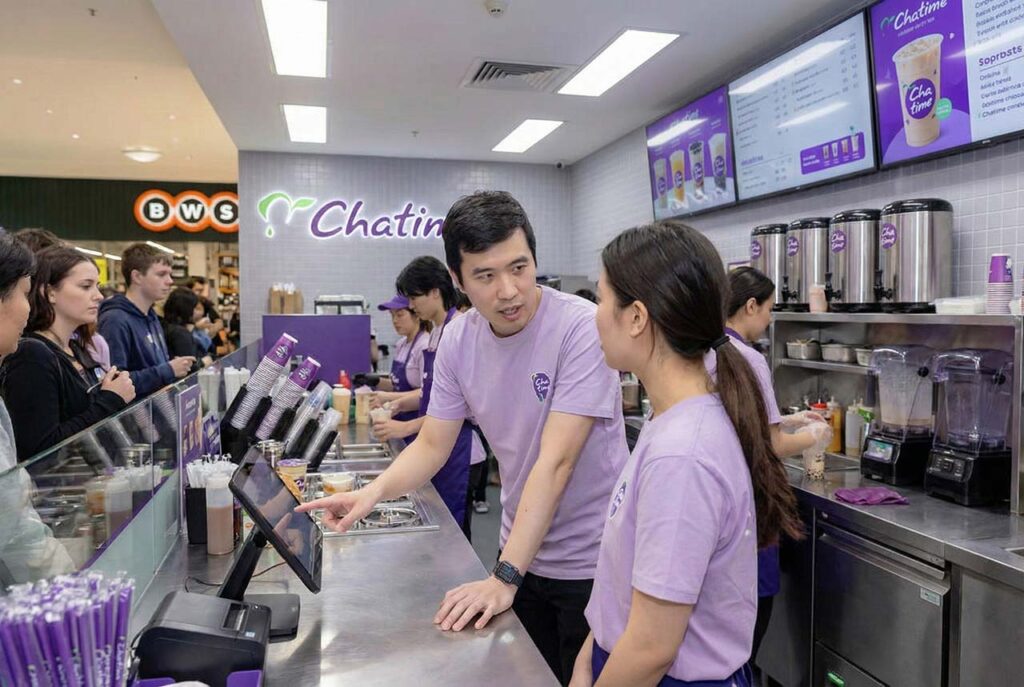
Bubble tea purchases are typically social and repeat-driven. Customers often buy in groups, which lifts average transaction values through multiple drinks and add-ons. Unlike morning coffee, demand tends to peak in the afternoon and evening, influencing staffing and trading hours.
Consumer behaviour also varies by location. CBD stores benefit from commuter and tourist traffic, while suburban and regional locations rely more heavily on repeat local customers. Franchisees who align store formats, staffing models, and promotional timing with local behaviour patterns generally achieve more consistent performance.
Competitive Landscape in the Australian Market
Australia’s bubble tea sector is competitive but concentrated. A small number of national brands account for a significant share of store count, marketing reach, and supply chain efficiency.
Large franchise networks benefit from economies of scale, centralised marketing, and established supplier relationships. These advantages translate into more predictable operating costs and reduced trial-and-error for franchisees.
Independent bubble tea stores remain common, particularly in metropolitan areas. While some perform well, they often face higher operational risk due to reliance on owner involvement, inconsistent supply chains, and limited brand awareness.
This contrast is why many investors choose to explore a proven Chatime franchise opportunity rather than launching an independent store.
Chatime’s Position Within the Australian Bubble Tea Market
Chatime occupies a distinct position within Australia’s bubble tea landscape, shaped by longevity, scale, and operational maturity.
As one of the earliest international bubble tea brands to establish a strong national footprint, Chatime has built long-term brand recognition and consumer trust. This has allowed the brand to adapt to changing tastes while maintaining consistency across its network.
For prospective franchisees, understanding why Chatime is considered a leading bubble tea franchise in Australia provides valuable insight into how scale and systems reduce operational risk.
Standardised store design, structured training programs, and centralised marketing support create operational consistency. Technology investments such as digital ordering and loyalty platforms further support customer retention and data-driven decision-making.
Strategic Growth Opportunities for Franchisees
Despite increased competition, meaningful growth opportunities remain across the Australian bubble tea market.
Emerging regional centres and mixed-use developments offer strong potential where demographics support repeat visitation but competition is less intense than in CBDs. University precincts and transport hubs continue to perform well due to consistent foot traffic.
Menu innovation remains a key lever for sustained performance. Franchisees who actively leverage seasonal campaigns and national promotions often benefit from higher visit frequency, as outlined in insights on bubble tea franchise growth in Australia.
Risks and Barriers to Entry
Balanced evaluation requires acknowledging the challenges associated with bubble tea franchising.
Market saturation in some metropolitan areas can pressure margins. Rising rents and labour costs affect all food and beverage operators, while consumer spending remains sensitive to broader economic conditions.
Operational execution remains critical. Poor site selection, undercapitalisation, or staffing challenges can undermine even strong brands. This is why understanding the key steps to evaluate a franchise before investing
is essential.
How to Evaluate a Bubble Tea Franchise Opportunity
Prospective franchisees should approach evaluation systematically. This includes analysing local demographics, reviewing financial benchmarks, assessing franchisor support, and confirming territory arrangements.
Transparent franchisors clearly outline how to apply for a Chatime franchise and what suitability criteria apply before progressing further.
Next Steps for Prospective Franchisees
For investors ready to move beyond research, engaging directly with the franchise team is the appropriate next step. This enables tailored cost confirmation, eligibility review, and clarification of timelines.
You can also review the Chatime franchise FAQs to address common questions before taking the next step.
Start Your Journey when you are ready to explore suitability.
Want to See the Latest Chatime Franchise Opportunities?
Browse current listings on Seek Business to get a feel for what’s available right now across Australia, then come back and Apply Now when you’re ready to talk suitability and next steps.
- View live opportunities in one place
- Compare locations and listing details quickly
- Use it as a starting point for your research