What does an exclusive franchise territory actually include?
An exclusive franchise territory is a mapped area where the franchisor agrees not to grant another franchise of the same brand. Boundaries get drawn by postcode, suburb cluster, radius, or population catchment. That line decides exactly where your franchise territory rights start and stop.
Here is the part most first-time franchisees skim past, and it deserves saying plainly. Exclusivity protects your right to run the brand inside the boundary. It does not automatically cover every type of sale, every channel, or every new format the brand might launch later. The wording in your exclusive territory franchise agreement decides what sits inside your patch and what sits outside it. So read the territory clause slowly. Then read it again.
A strong franchise territory protection clause spells out three things with no room for guesswork:
- The exact boundary. Defined by postcode, map, radius, or named catchment, never a loose description.
- What the exclusivity applies to. Usually the right to open and operate a store of that brand.
- The exceptions. The situations where the franchisor keeps rights, such as other channels or formats.
Missing or vague on any of the three? That is your cue to ask questions. A clear boundary is the difference between knowing your patch and hoping you understand it.
What is the difference between an exclusive and a protected franchise territory?
An exclusive franchise territory and a protected franchise territory sound identical. They are not. The difference comes down to how much the franchisor actually gives up.
A genuinely exclusive territory means the franchisor will not operate, or let anyone else operate, a same-brand outlet inside your boundary. A protected territory can be narrower. It might stop another franchisee opening nearby while still letting the franchisor reach your customers through other channels, such as online sales or a different store format.
In plain terms:
| Term | What it usually guarantees | What to check |
|---|---|---|
| Exclusive territory | No other same-brand outlet inside your boundary | Whether online and alternate formats are included |
| Protected territory | Protection against new nearby franchises | Whether the franchisor keeps rights to other channels |
Neither label is automatically better. The detail behind it is what counts. Two agreements can both say “protected” and deliver wildly different levels of franchise territory protection. Read the clause, not the heading.
Can another franchisee open a location inside my exclusive territory?
Under a properly drafted exclusive territory franchise agreement, no. The core promise of exclusivity is that the franchisor will not grant another franchisee the right to open the same brand inside your mapped boundary. That is the protection you are paying for.
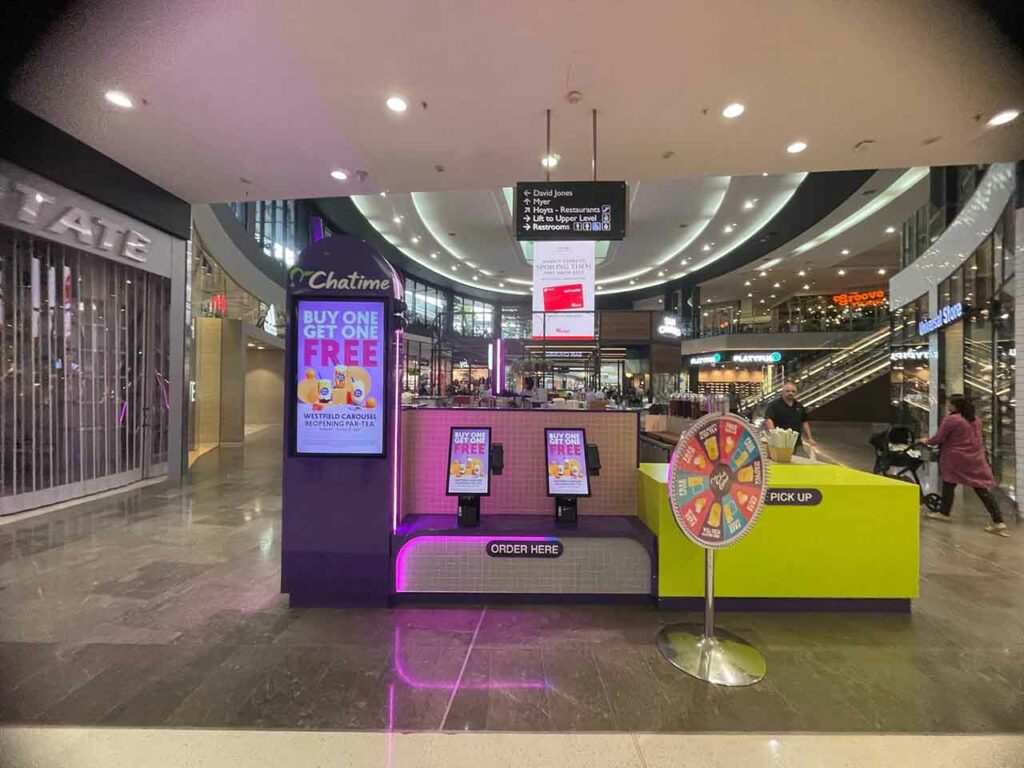
Picture the practical version. A branded kiosk opens in a shopping centre two suburbs over. Is it inside your boundary? If yes, and your agreement is genuinely exclusive, it should not happen without your involvement. If it sits just past the line, it may be allowed, even if it pulls some of the same foot traffic.
This is why the boundary wording carries so much weight. A radius measured from your store, a list of postcodes, and a catchment defined by population can each produce a very different map. Before you commit, ask the franchisor to show you the boundary on an actual map, and confirm what happens right at the edges.
Can the franchisor open a company-owned location in my territory?
This one depends entirely on your agreement, and it is one of the most important exceptions to check. In some systems, exclusivity only restricts other franchisees. The franchisor may still reserve the right to open a company-owned or company-operated store inside your boundary.
That distinction catches people off guard. You assume “exclusive” means nobody else at all, when it can mean no other franchisee. A reserved right for the franchisor to trade directly is a common carve-out, so look for it by name.
When you review your exclusive territory franchise agreement, ask directly:
- Does exclusivity apply to the franchisor as well as to other franchisees?
- Can the franchisor open, buy, or operate a company store inside my boundary?
- If a corporate location is ever allowed, under what conditions?
Good franchise territory protection answers these on paper, not over coffee. A franchisor confident in its model will happily walk you through the clause and explain the thinking behind it. Vague answers tell you plenty on their own.
Does an exclusive franchise territory include online sales?
Not always. This is where modern franchise agreements get genuinely interesting. Older territory clauses were written for bricks-and-mortar stores. Online ordering, delivery apps, and click-and-collect added a whole new layer, and those older agreements did not always account for it.
So think it through. A customer inside your boundary opens Uber Eats or DoorDash and orders a brown sugar pearl milk tea for delivery. Who makes it, and who earns from it? The answer lives in how your agreement treats digital channels. Three common approaches exist:
- Online is included. Orders placed from inside your boundary flow to you. Your franchise territory rights cover physical and digital sales within the area.
- Online is shared or routed by proximity. Orders go to the nearest store, which may or may not be yours depending on the geography.
- Online is reserved by the franchisor. The brand runs ecommerce or national delivery centrally, and that revenue sits outside your territory.
None of these is automatically unfair. What matters is knowing which model applies before you sign, so your expectations match reality. Bubble tea leans on a younger, app-first crowd, so how online demand is handled is a real commercial question, not fine print.
Ask the franchisor to spell out, in writing, how digital orders from your area are treated. That single answer can reshape how you value the territory.
Who receives online orders from customers inside my franchise territory?
The franchisee who receives an online order from inside a territory is set by the routing rules in the agreement, not by assumption. Most systems use one of a few logical methods. Know which one governs your patch.
Common routing methods include:
- Delivery address. The order routes to the store whose territory contains the delivery address.
- Nearest store. Platform logic sends the order to the closest outlet, which may cross a boundary.
- Central fulfilment. The franchisor handles certain online orders directly through a managed channel.
Now picture two stores sitting near a boundary line. A customer orders to an apartment that falls inside your territory but is physically closer to the neighbouring store. Delivery-address routing sends it to you. Nearest-store routing may send it to them. Same order, different outcome, decided purely by the rule your agreement follows.
That is the real lesson of territory exclusivity. The map is only half the story. The rules sitting on top of the map, covering online orders, kiosks, corporate stores, and new formats, decide how much the exclusivity is actually worth to you day to day.
Key takeaways
- An exclusive franchise territory is a mapped area where the franchisor agrees not to grant another same-brand franchise. The boundary, the scope, and the exceptions all live in the wording.
- “Exclusive” and “protected” can mean different things. Read the clause, not the label.
- Check two common carve-outs carefully: whether the franchisor can open a company-owned store, and whether exclusivity covers online sales.
- Online order routing, whether by delivery address, nearest store, or central fulfilment, can decide who earns from customers inside your area.
- Strong franchise territory protection is clear on all of this in writing, before you sign.
Understanding your territory is one of the smartest moves you can make before stepping into ownership. Chatime reports more than 155+ stores across Australia. To explore its franchise opportunities,start your journey with Chatime today.